Nothing sharpens up a property faster than fresh mulch and clean bed lines. But mulch is doing real work too: it holds moisture through July and August, keeps soil temperatures even, slows weeds and feeds the soil as it breaks down.
We do the whole job, not just the dumping and spreading. Beds are weeded and cleaned out, edges are cut, and mulch goes down at an even depth, pulled back from trunks and siding.
What Is Included
Bed cleanup & weeding
Weeds, leaves and old debris cleared so the mulch goes onto clean beds.
Bed edging
A crisp cut edge between lawn and bed that keeps mulch in and grass out.
Mulch installation
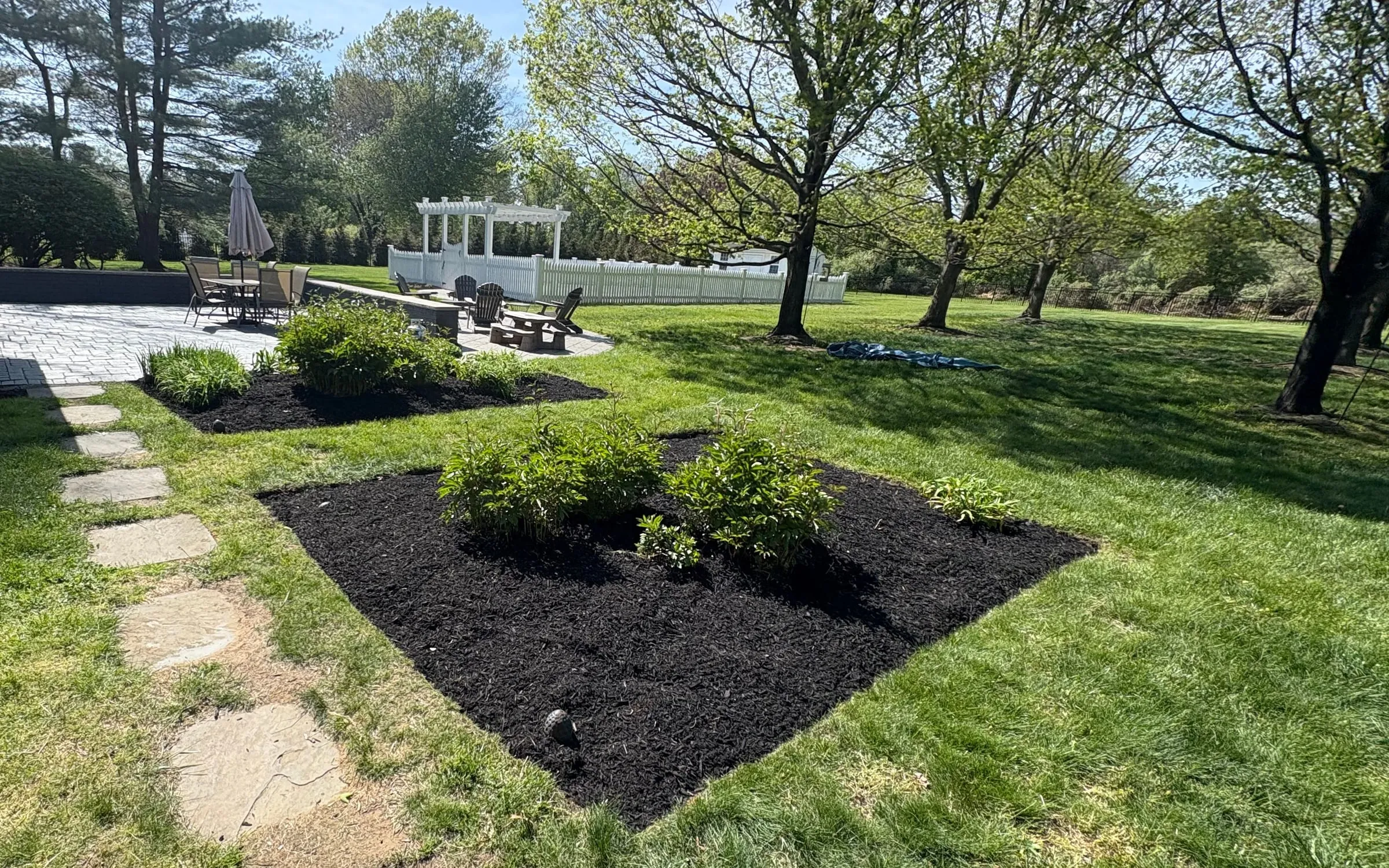
Dyed black or brown, or natural hardwood mulch, spread by hand at an even two to three inches.
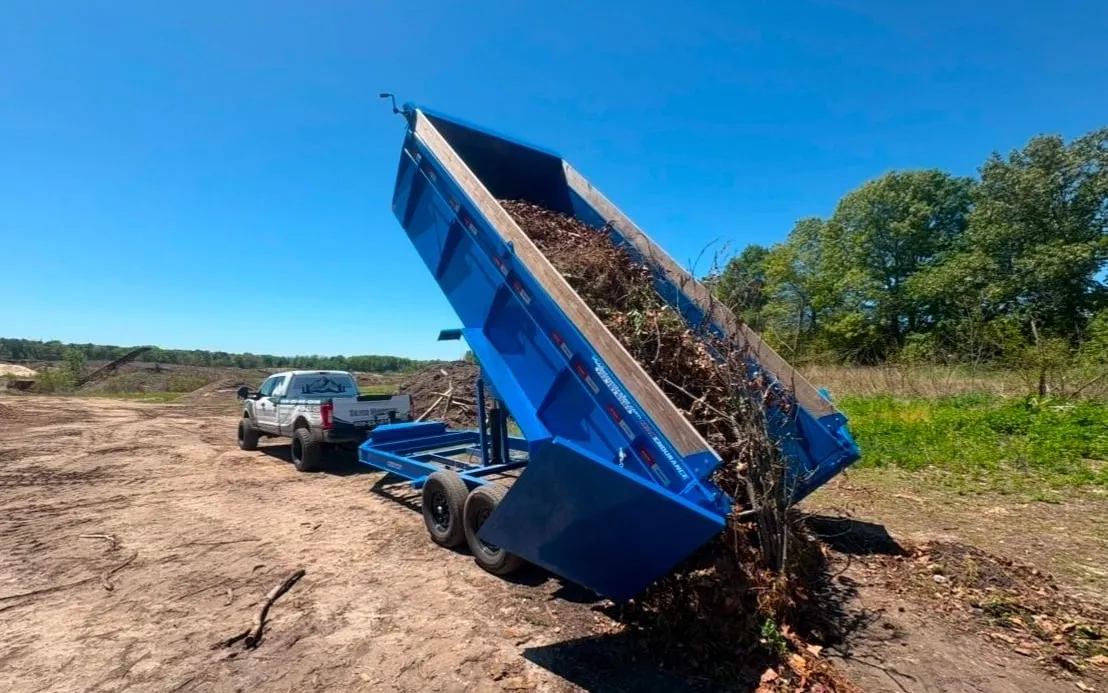
Delivery & haul-away
We bring the material and take the weeds and debris with us when we leave.
How much mulch is the right amount?
Two to three inches is the target. Less and weeds push through; more and you can smother roots and hold moisture against trunks. If your beds already have years of buildup, we will often remove or turn the old layer rather than keep piling on top. And we never build “mulch volcanoes” around trees.
Before & After: Mulching
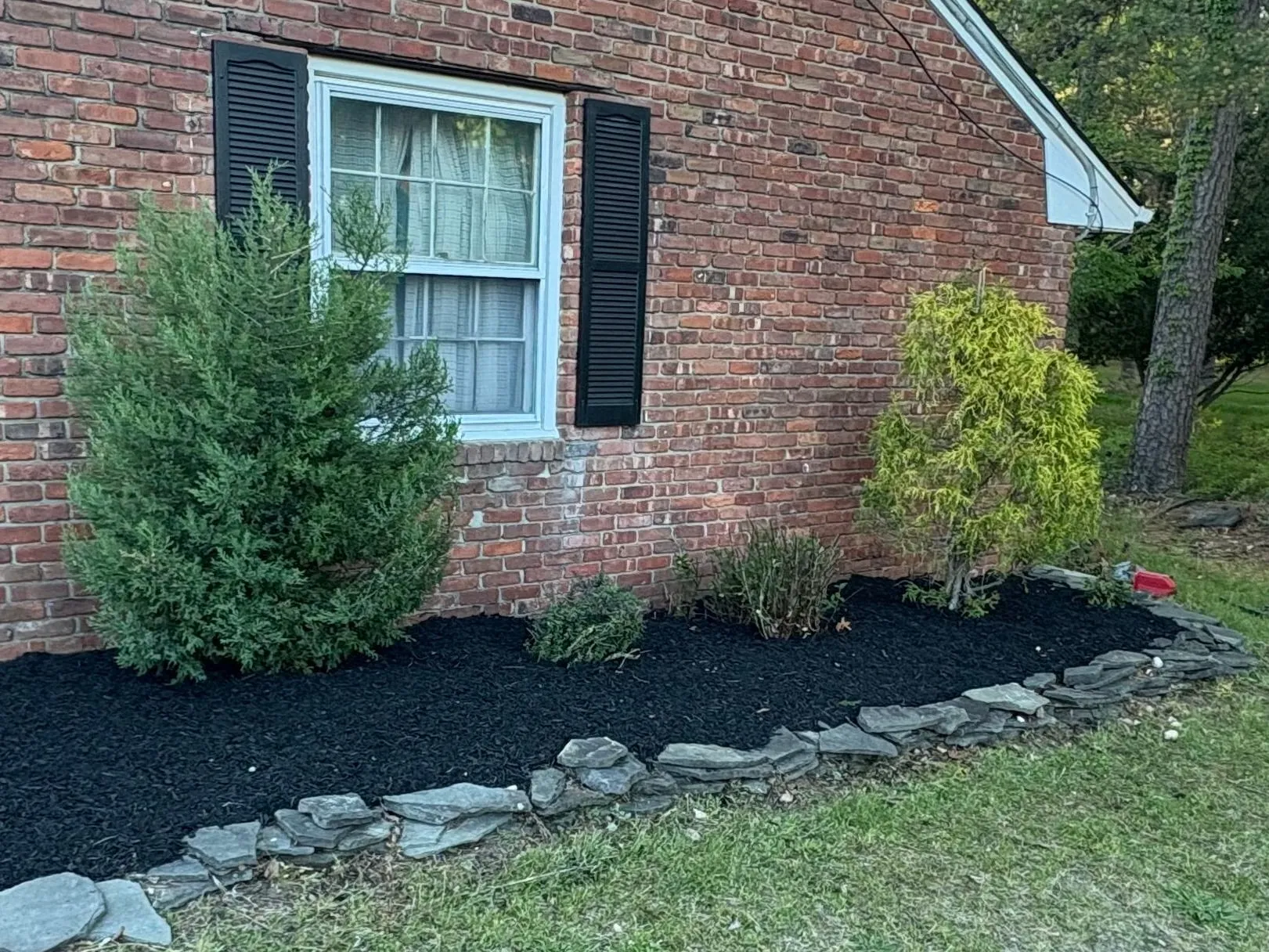
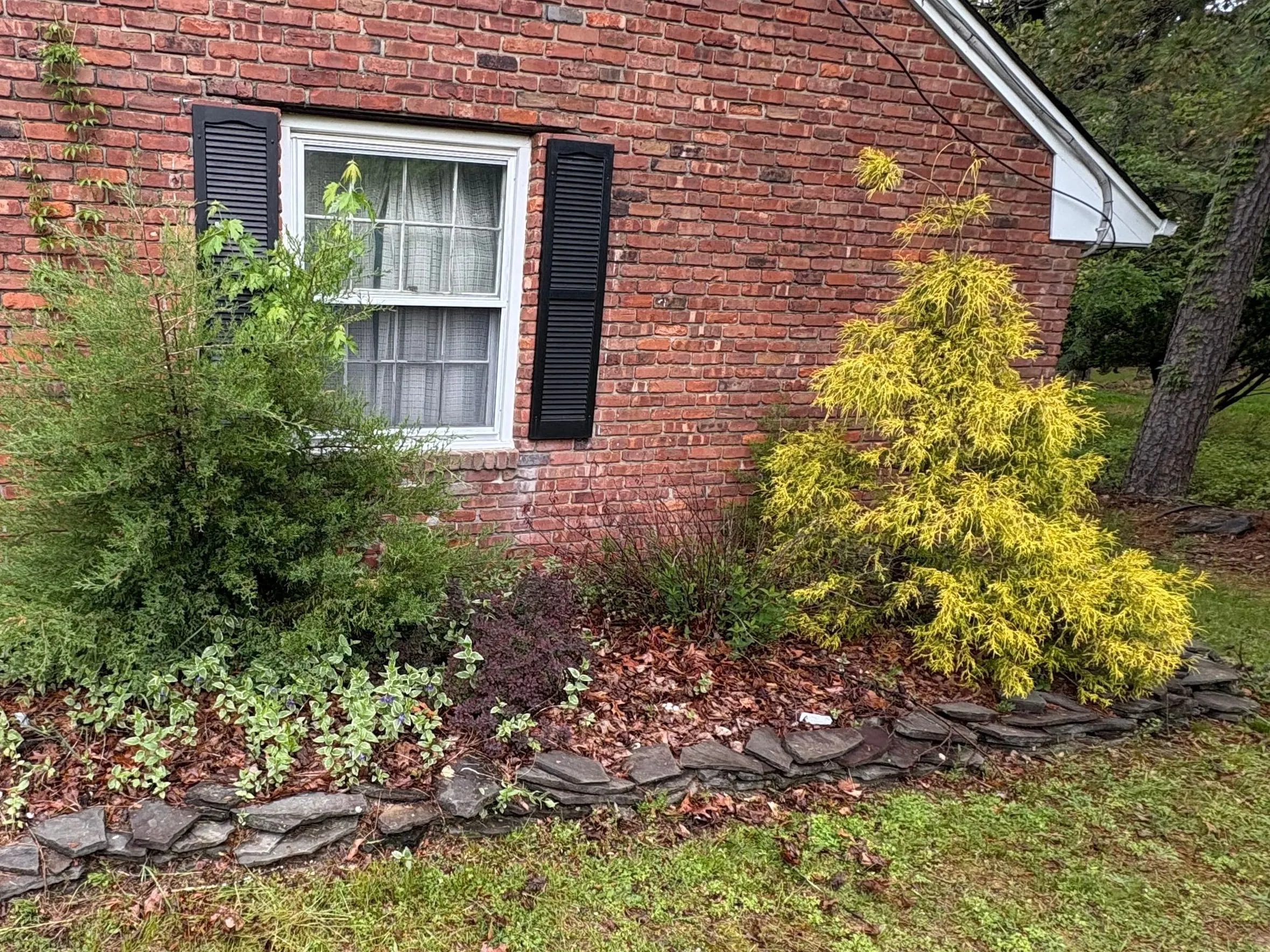
Overgrown bed weeded, pruned and mulched


New landscape built from scratch: beds, evergreens and black mulch
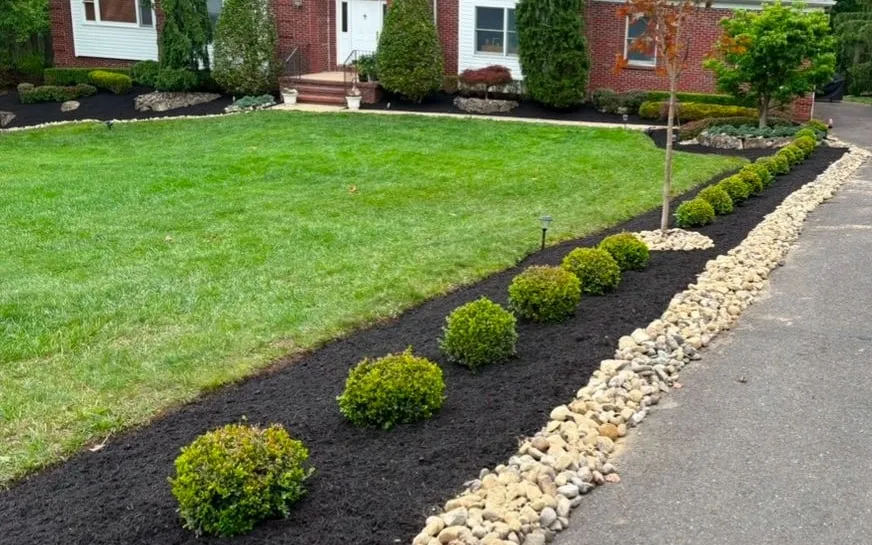
Every bed here is new. We cut the beds in along both sides of the driveway and around the front entrance, planted the evergreens, laid geotextile fabric, then finished with black mulch and a crisp edge.
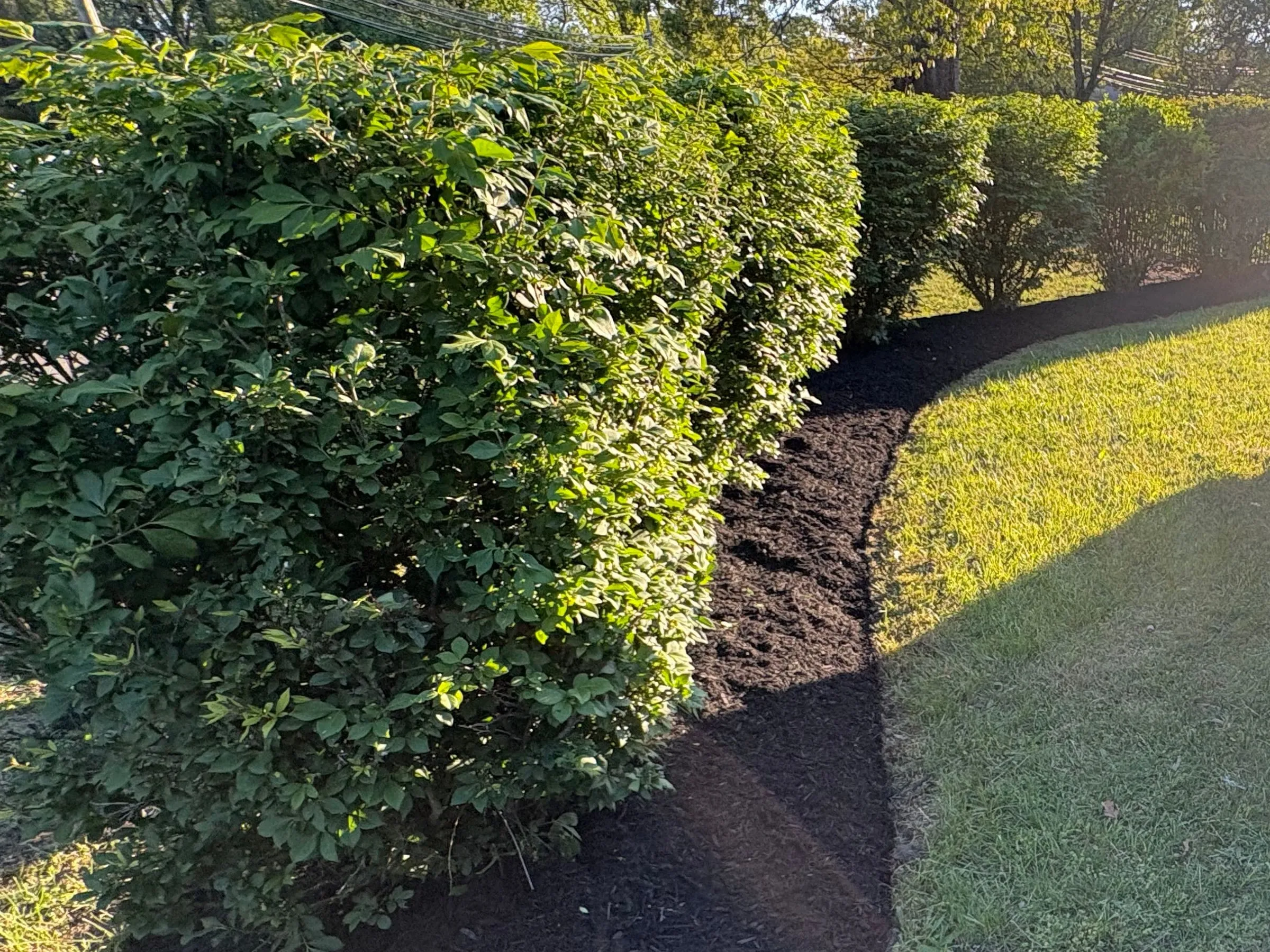
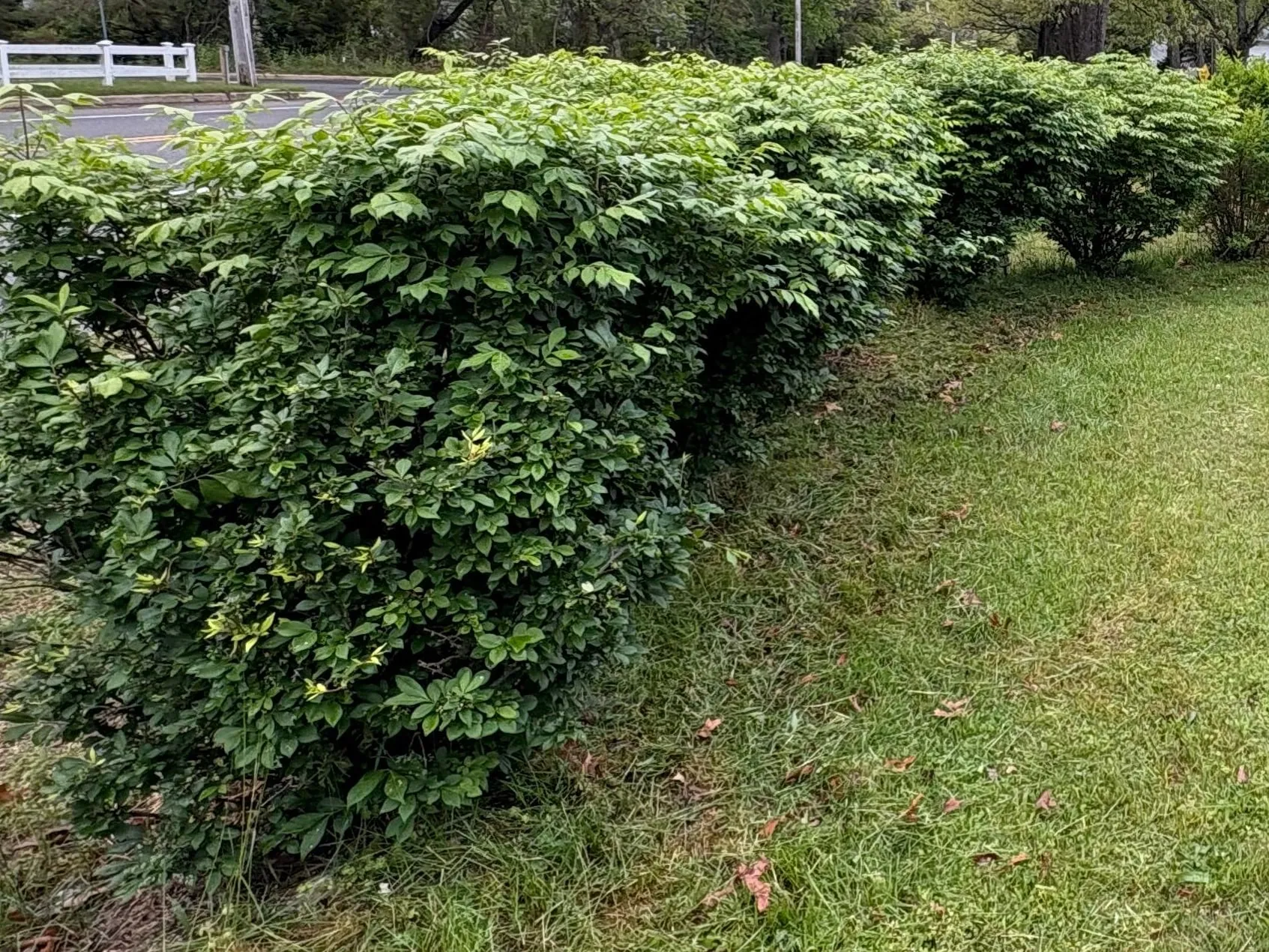
Roadside hedge trimmed, with a new mulch bed
How It Works
- Consultation. We walk the property with you and look at what the job involves and what you want the finished result to be.
- Plan & Estimate. You get a clear written scope and price. No surprises and no pressure.
- The Work. Our crew shows up on the day we said, does the job properly and keeps the site clean.
- Walkthrough. We go over the finished work together and answer any questions about looking after it.
What Affects the Cost
Every property is different, so we price each job after seeing it. These are the main factors:
- Total bed area. More beds mean more yards of mulch and more edging.
- Mulch type. Dyed and natural mulches are priced differently.
- Prep needed. Overgrown beds with heavy weeds take longer than beds maintained every year.
- Access. How far material has to travel by wheelbarrow from the driveway.
Recent Work: Mulching
Mulching: Frequently Asked Questions
How often should mulch be replaced?
Most properties benefit from a fresh top-up once a year, usually in spring. Dyed mulch holds its color for about a season; natural hardwood fades faster but breaks down into good soil.
What color mulch should I choose?
Black makes plants and flowers pop and suits most homes. Brown looks the most natural. We are happy to talk through what will look best against your house.
Do you remove the old mulch first?
Only when it has built up too deep or has matted. Otherwise we loosen it and top-dress, which is better for the soil and for your budget.
When is the best time to mulch?
Mid-spring, after the beds are cleaned up and before summer heat, is the most popular time. Fall mulching is also worthwhile because it insulates roots through winter.