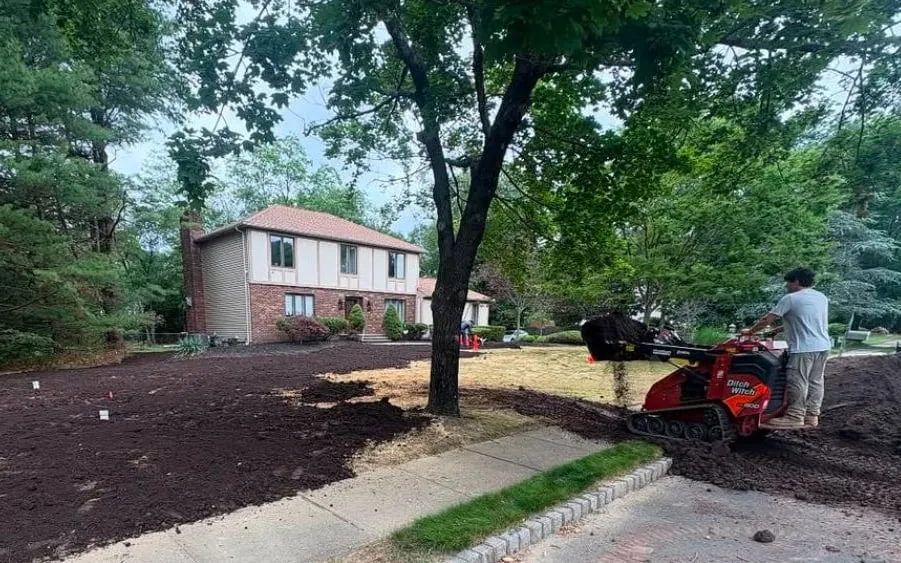
Whether you have a new build with bare dirt, a yard torn up by construction or a lawn that is past saving, we can give you a clean start. Sod gives you a finished, green lawn the same day. Seeding costs less and gives you more choice in grass type, but takes a season to fill in.
Either way, the prep decides how the lawn does in year two and beyond. We remove the old turf and debris, loosen and grade the soil, add topsoil where it is thin, and only then install.
What Is Included
Site preparation
Old lawn and weeds removed, soil loosened and graded smooth so the new lawn roots quickly.
Sod installation
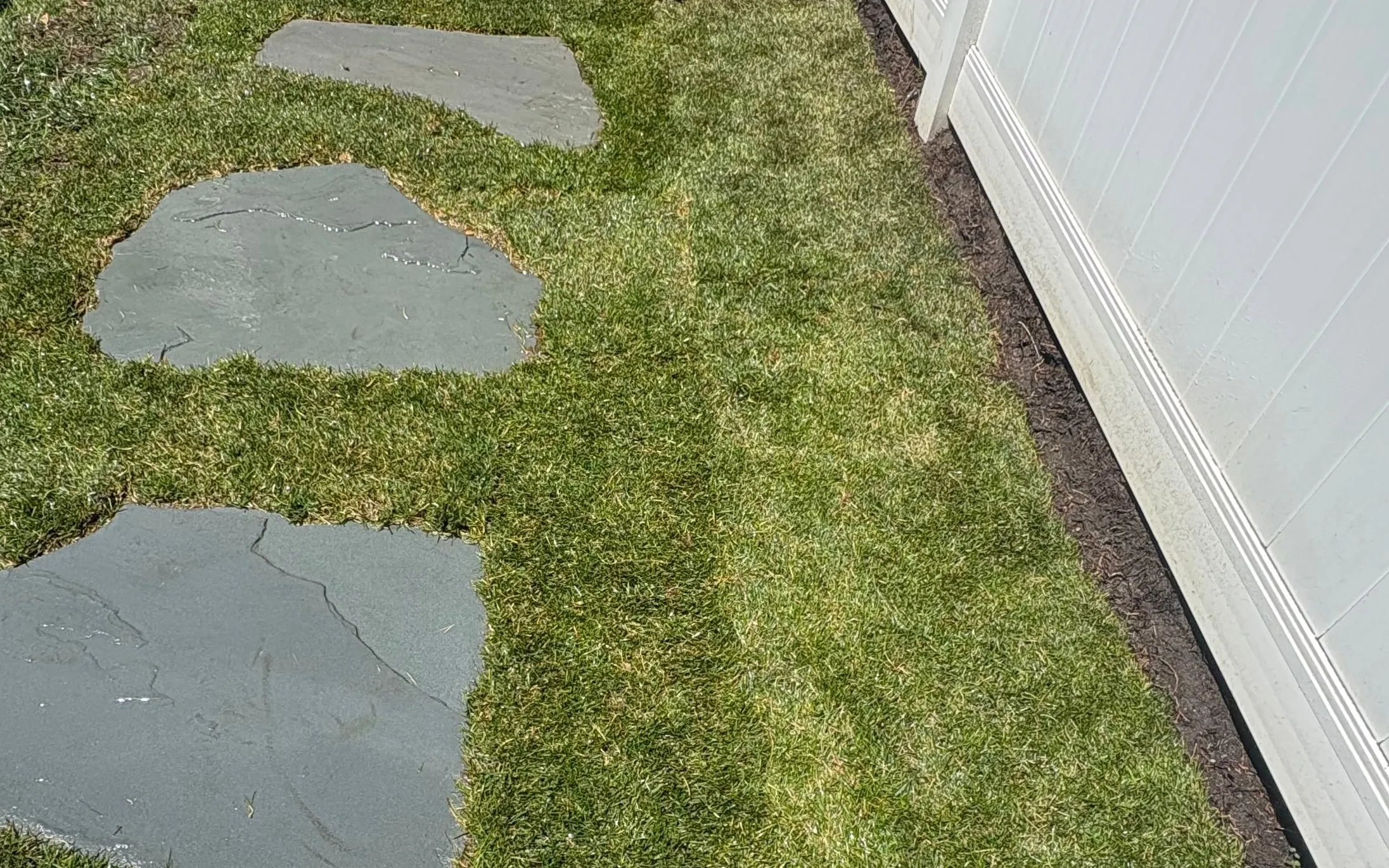
Fresh-cut sod laid tight with staggered seams, trimmed neatly around beds and walks, and rolled for good soil contact.
New lawn seeding
Seed blends matched to your sun, shade and how the yard gets used, with cover to hold moisture while it sprouts.
Watering guidance
A simple schedule for the first few weeks, which is when a new lawn is made or lost.
Sod or seed for a New Jersey lawn?
Sod can go down almost any time the ground is not frozen, as long as it can be watered. That makes it the right call for summer projects and for slopes where seed would wash out. Seed is best saved for late summer and early fall. Not sure? We will walk the yard and give you a straight recommendation with pricing for both.
Before & After: Sod & Seeding
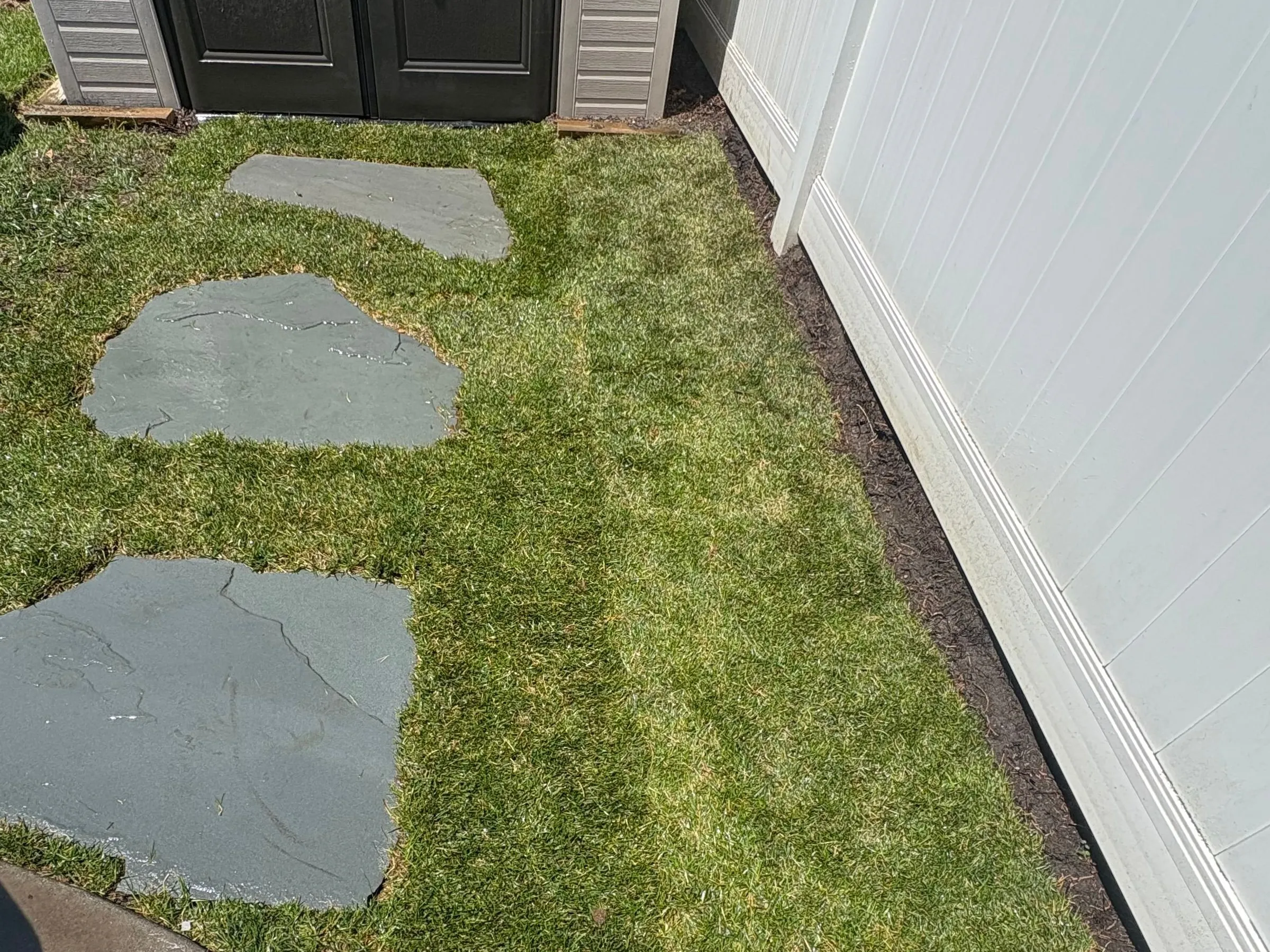
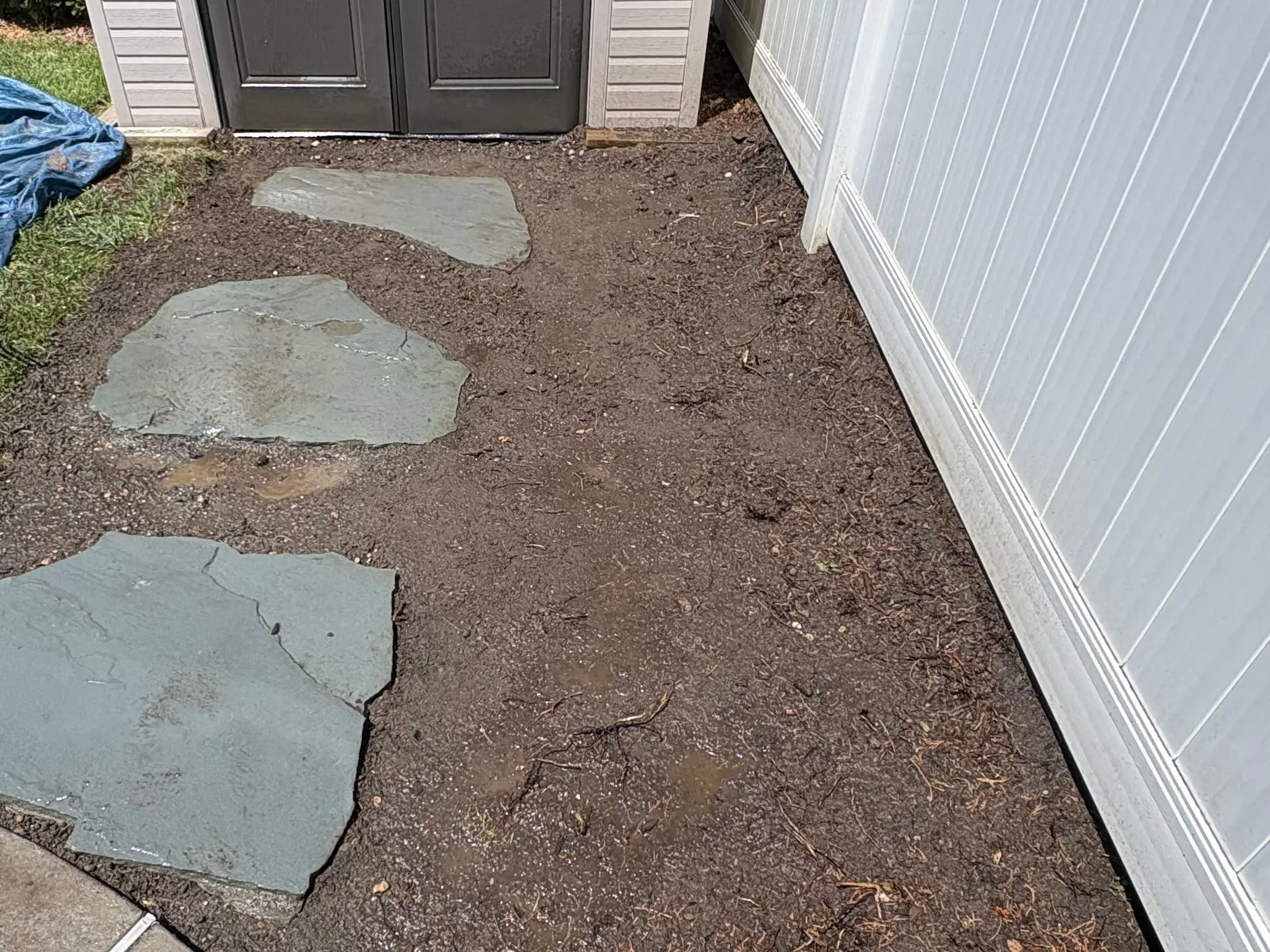
Stepping stones set in fresh sod
How It Works
- Consultation. We walk the property with you and look at what the job involves and what you want the finished result to be.
- Plan & Estimate. You get a clear written scope and price. No surprises and no pressure.
- The Work. Our crew shows up on the day we said, does the job properly and keeps the site clean.
- Walkthrough. We go over the finished work together and answer any questions about looking after it.
What Affects the Cost
Every property is different, so we price each job after seeing it. These are the main factors:
- Square footage. The size of the lawn drives material and labor.
- Sod versus seed. Sod costs more up front; seed costs less and takes longer.
- Soil preparation. Removing old turf, grading and adding topsoil where it is needed.
- Access. Tight gates and backyards that equipment cannot reach take more hand work.
Recent Work: Sod & Seeding
Sod & Seeding: Frequently Asked Questions
How soon can we walk on new sod?
Light foot traffic is fine after about two weeks. Hold off on heavy use and dogs running laps until the sod has rooted, usually three to four weeks. Mowing does not wait that long: make the first cut once the grass reaches three to four inches and the ground is firm enough to walk on without sinking, with the mower set high, about three inches. Tug gently on a corner: if it resists, it has rooted.
How often do I water new sod?
Plan on watering daily for the first two weeks so the sod and the soil beneath it stay moist, then taper to deeper, less frequent watering as the roots establish. Hot, windy weather calls for more.
Is sod better than seed?
Neither is better across the board. Sod is instant, controls erosion right away and can be installed in summer. Seed is more affordable and offers more variety, but it needs the right season and more patience.
Can you sod just part of my yard?
Yes. We regularly patch sections damaged by construction, pools, septic work, pets or shade and blend them into the existing lawn.