Patios, walkways and retaining walls go green and gray so slowly that you stop noticing, until they are cleaned. Algae, moss and dirt build up fastest in shade and damp corners, and they make stone and pavers slippery as well as dull.
We wash algae, moss and built-up dirt off hard surfaces, using full pressure where the surface can take it and a gentler soft wash where it cannot. On paver surfaces we finish by sweeping fresh sand into the joints, so the pavers stay locked together and weeds have a harder time moving in.
What Is Included
Power washing
Pavers, concrete, stone walls and steps cleaned of algae, moss and ground-in dirt.
Soft washing
A low-pressure wash with cleaning solution for surfaces that high pressure could damage.
Paver joint sanding
Fresh sand swept into paver joints after washing, to lock the pavers and keep weeds down.
Homes and businesses
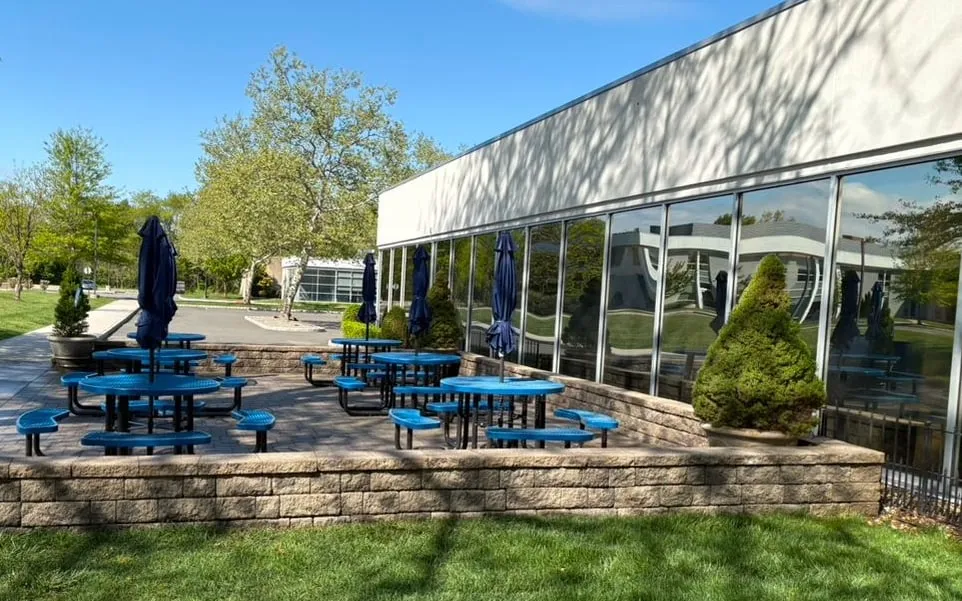
Backyard patios and front walks, as well as commercial patios, entrances and walls.
Why surfaces turn green here
New Jersey’s humid summers and shaded, north-facing spots are ideal for algae and moss, which leave surfaces slick as well as dull. Washing does pull sand out of paver joints, which is why we re-sand as part of the job rather than leaving the joints open.
Before & After: Power Washing
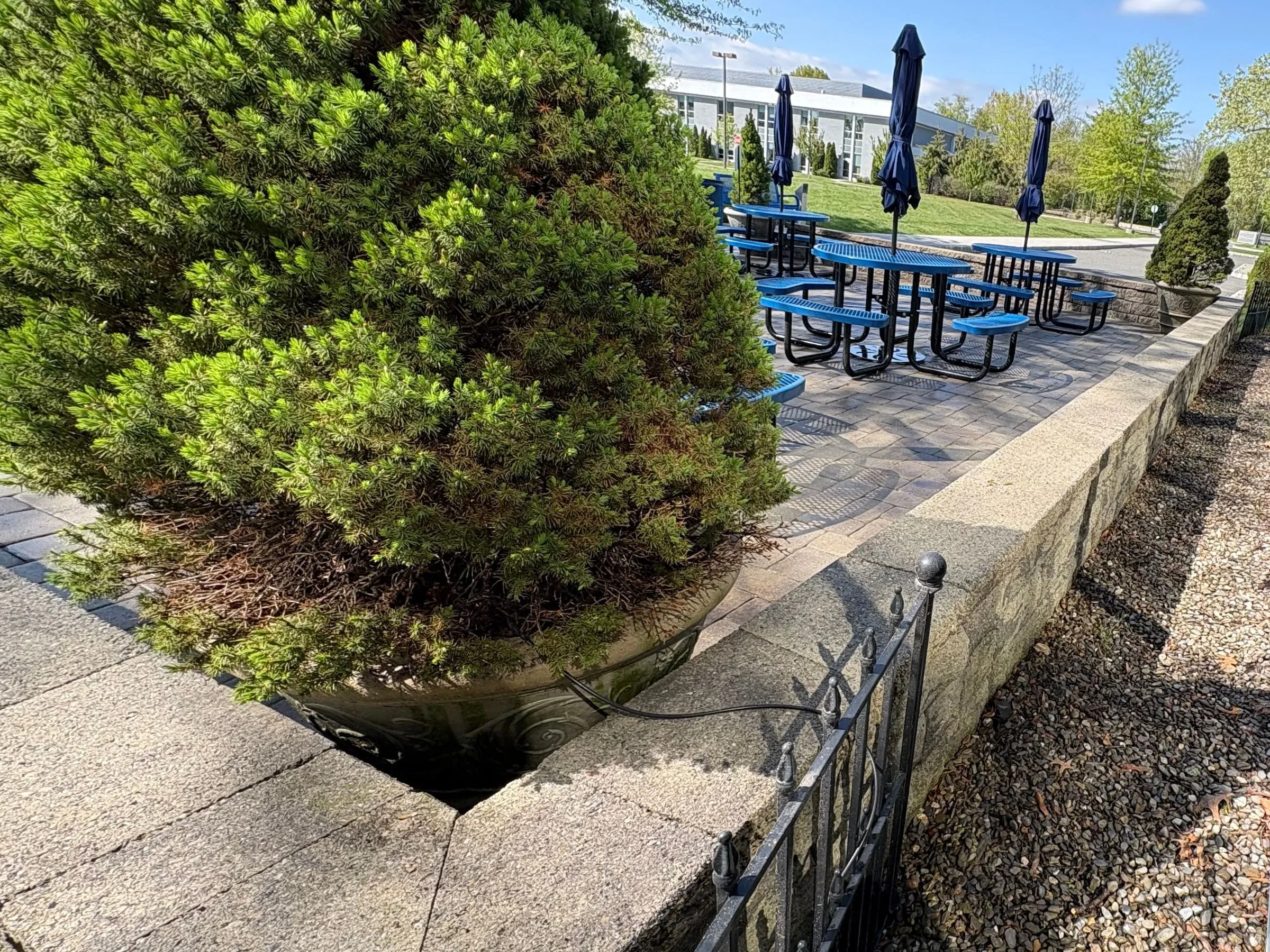
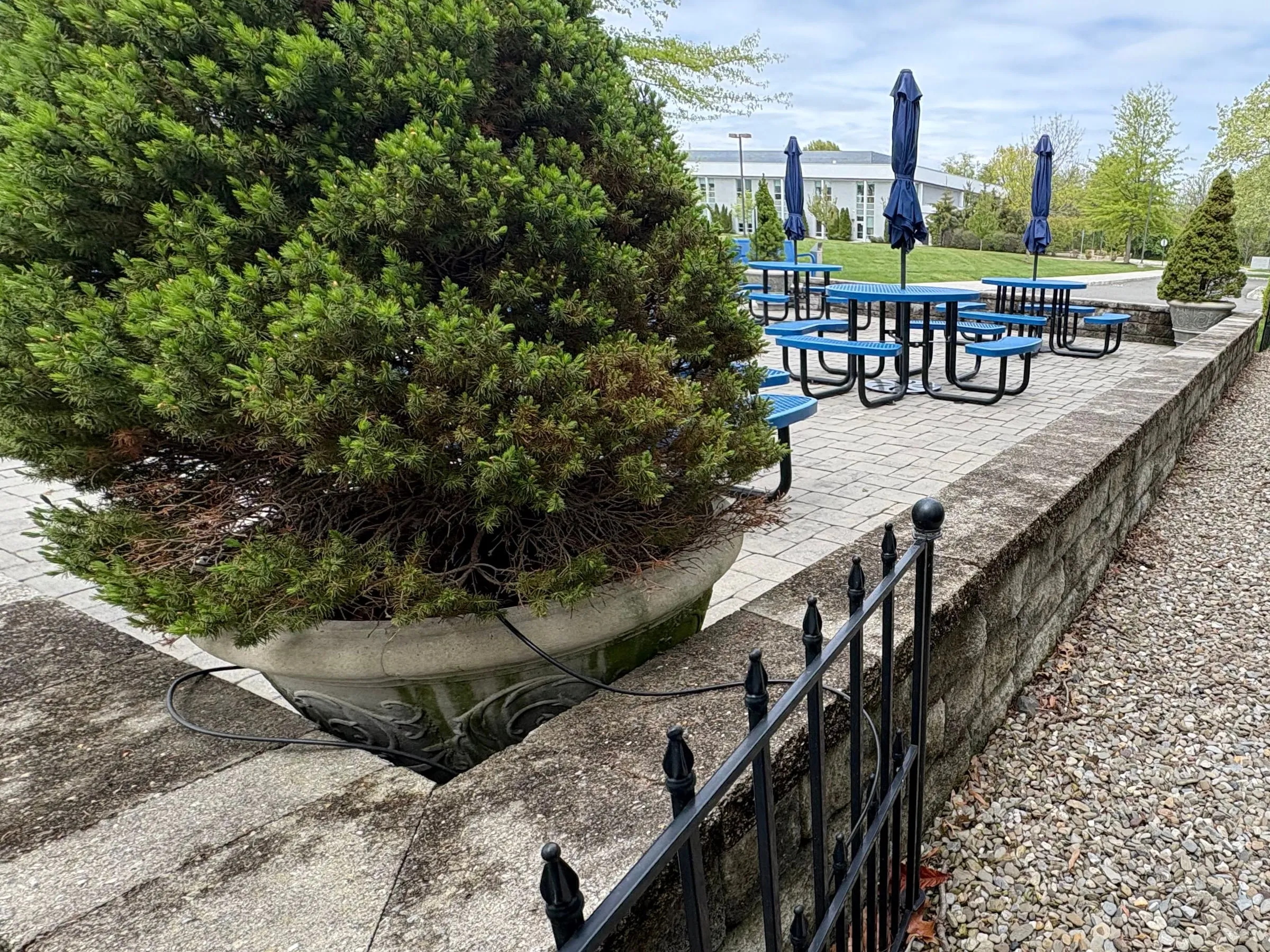
Wall cap and patio edge, power washed
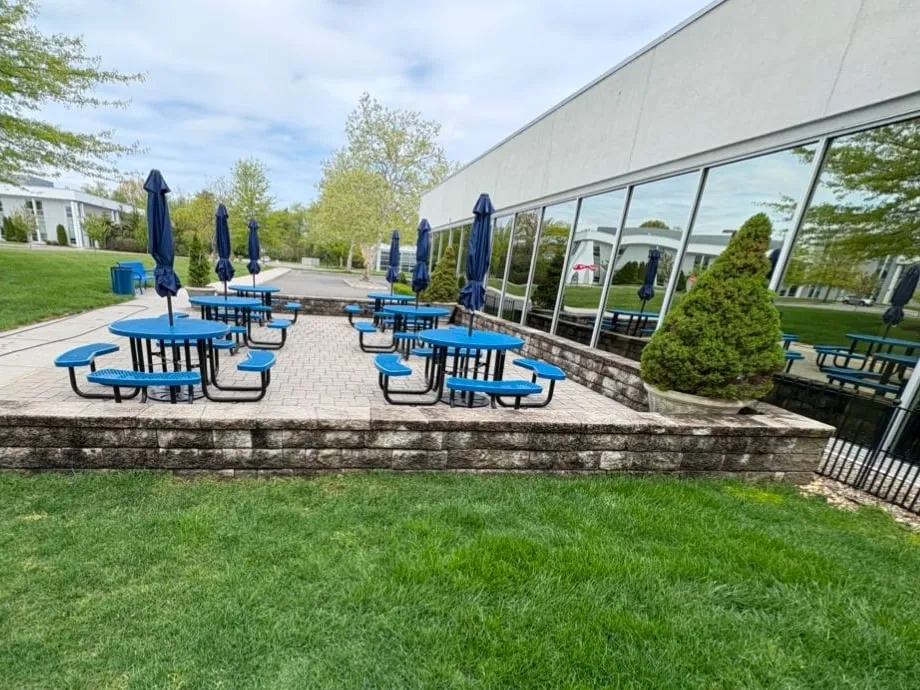 Before
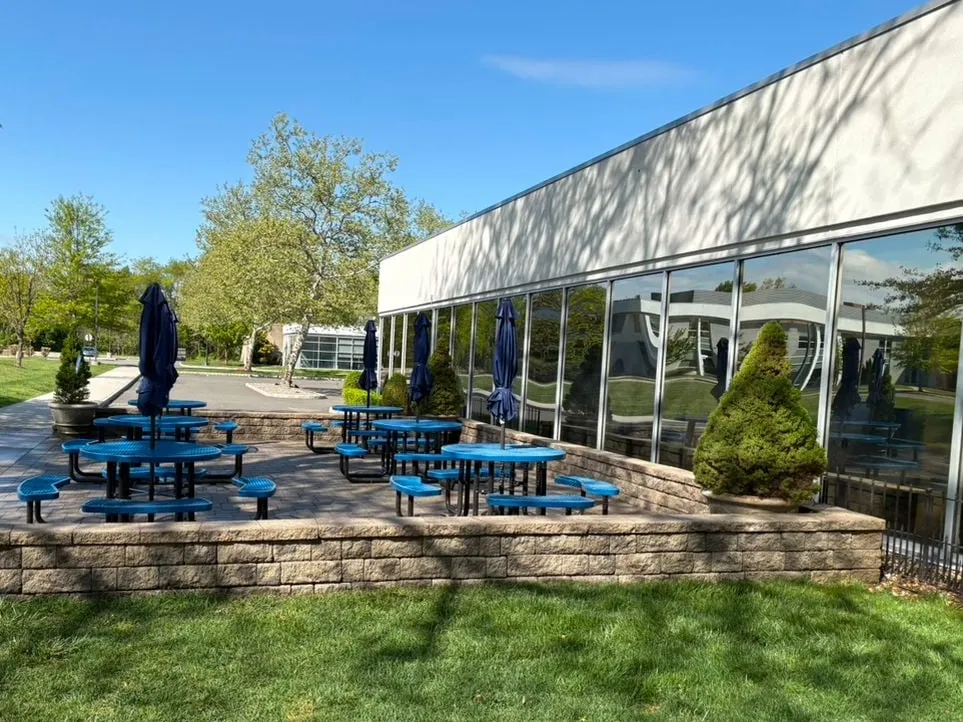 After
Patio and retaining wall, power washed
How It Works
- Consultation. We walk the property with you and look at what the job involves and what you want the finished result to be.
- Plan & Estimate. You get a clear written scope and price. No surprises and no pressure.
- The Work. Our crew shows up on the day we said, does the job properly and keeps the site clean.
- Walkthrough. We go over the finished work together and answer any questions about looking after it.
What Affects the Cost
Every property is different, so we price each job after seeing it. These are the main factors:
- Size of the area. Square footage of patio, walkway or wall to be cleaned.
- How heavy the buildup is. Years of moss and staining take more passes than a yearly cleaning.
- Type of surface. Pavers, concrete and natural stone each need a different approach.
- Joint sanding. How much paver area needs fresh sand after washing.
Power Washing, Soft Washing & Sanding: Frequently Asked Questions
What is the difference between power washing and soft washing?
Power washing uses high water pressure to lift dirt and growth off hard surfaces like pavers and concrete. Soft washing uses low pressure and a cleaning solution, which is safer for surfaces that high pressure can scar or strip.
Will power washing damage my pavers?
Not when the pressure and technique suit the surface. It does remove sand from the joints, which is why we sweep fresh sand back in afterward.
Why do paver joints need sand?
Joint sand locks pavers against each other so they do not shift, and it leaves less room for weeds and ants. After a wash, open joints should be refilled.
Do you clean commercial properties?
Yes. We clean patios, entrances, walkways and walls for businesses as well as homes.